
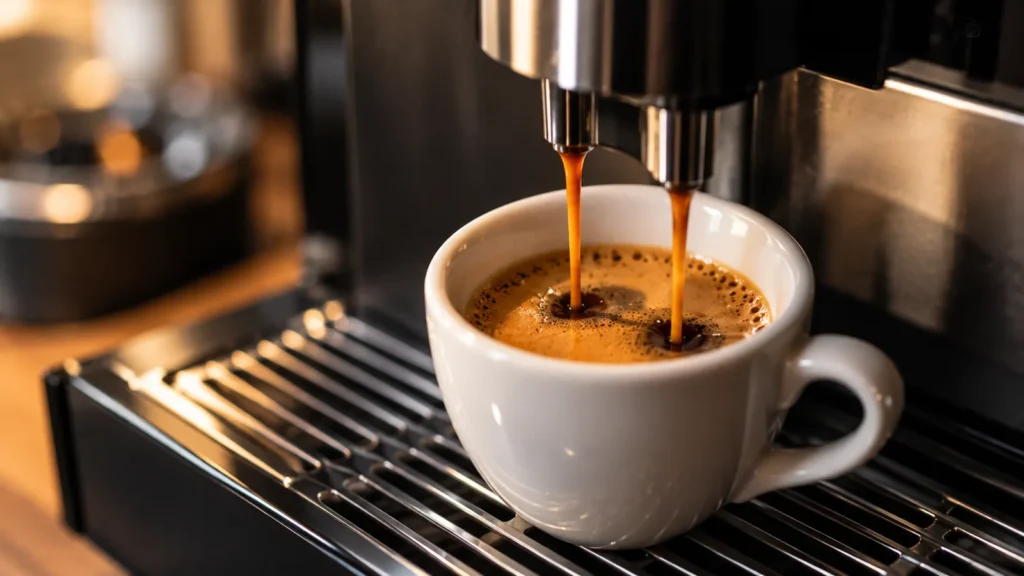
A good espresso comes down to four variables: fresh beans, the right grind, a consistent dose and the correct extraction time. Get those right and almost any decent machine produces a good shot. Get them wrong and no machine rescues it. Panica Coffee supplies beans and commercial superautomatic coffee machines to Melbourne workplaces, so this guide covers both the manual version and what changes when the machine does the work for you.

Start with fresh beans
Coffee is at its best in the weeks after roasting, not months. Buy about four weeks at a time, keep the bag sealed and out of sunlight, and only fill the hopper with what will be used in a day or two.
Use whole beans, never pre ground. Ground coffee stales within days, which undoes everything else on this list.
Get the grind right
Grind size is the main lever over extraction. Too coarse and the water rushes through, producing a thin, sour shot. Too fine and it chokes, producing a bitter, over extracted one.
Adjust in small steps and change one thing at a time. Grind also drifts as burrs wear, which is why an espresso that used to be right can slowly stop being so.
Dose and tamp consistently
On a manual machine, use the same dose every time and tamp level with firm, even pressure. Consistency matters more than force, because an unevenly tamped puck lets water channel through one side and under extract the rest.
Want consistent coffee without the technique? Panica Coffee can recommend a commercial superautomatic machine that handles grind, dose and extraction automatically for a workplace.
Watch the extraction
A standard espresso is commonly pulled in roughly 25 to 30 seconds. If the shot runs much faster, grind finer. If it takes much longer, grind coarser. Judge by taste as well as the clock, because the numbers are a guide rather than the goal.
Look at the stream: it should start dark, run steadily, and lighten as it finishes.
Water matters more than most people think
Water is most of what ends up in the cup, and unfiltered water dulls the flavours and builds scale inside the machine. Our guide to water filtration covers it.
What changes on a superautomatic
A commercial superautomatic coffee machine grinds, doses, tamps, brews and textures milk automatically, so grind and extraction are set once and then repeated identically. That removes technique from the equation, which is exactly what a workplace needs when dozens of untrained people use the same machine.
The variables that remain are the ones you still control: bean freshness, water quality and the daily clean, since old coffee oils in the brew group taint every drink after them.
Need Advice From Panica Coffee?
Tell Panica Coffee what machine you have and what your team drinks, and we can suggest a bean and a setup that produces a consistent shot. Call 1300 529 505 or send the form below.
Frequently Asked Questions
Q1: How long should an espresso shot take? Commonly around 25 to 30 seconds. Faster usually means the grind is too coarse, slower that it is too fine.
Q2: Why does my espresso taste sour? Sourness usually indicates under extraction, often from too coarse a grind or too short a shot. Bitterness is usually the opposite.
Q3: Does bean freshness really matter? Yes, more than most equipment choices. Coffee is best in the weeks after roasting, and pre ground coffee stales within days.
Q4: Can a superautomatic make a proper espresso? Yes. It controls grind, dose and extraction consistently, which is why workplaces use them.
Q5: What if the coffee was fine and has got worse? Check the beans first, then the water filter, then the cleaning routine. Worn grinder burrs are another common cause.
Coffee Not Tasting Right at Work?
Tell Panica Coffee the machine, the beans and what changed. We will tell you where the problem most likely sits. Call 1300 529 505.