
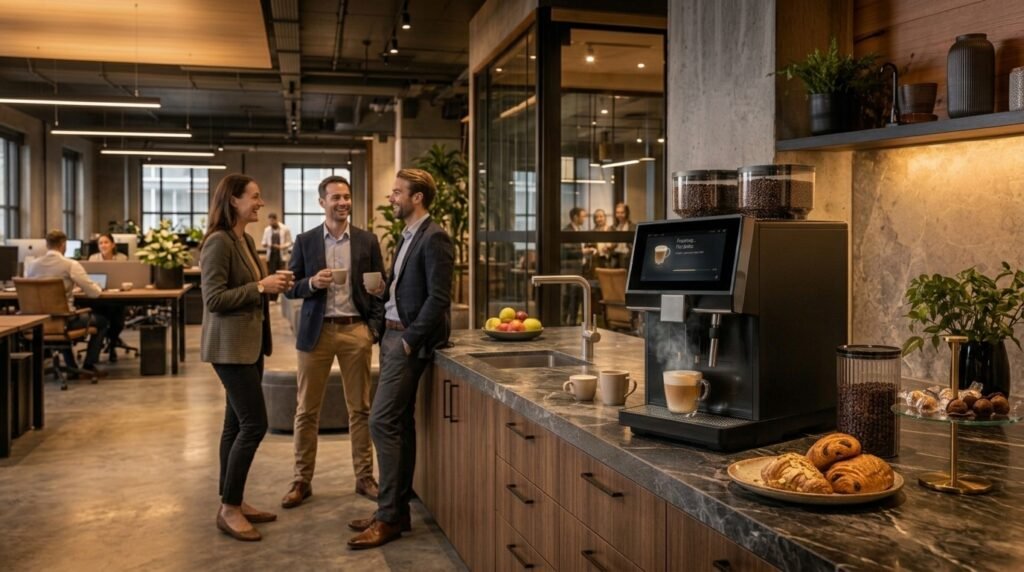
The single biggest factor in choosing an office coffee machine is not brand or budget, it is how many people will use it. A machine sized for a 10-person team will jam and queue at 60 people, and a machine sized for 100 staff is an expensive, oversized purchase for a 15-person office. Here is what actually works at each stage of growth.
Why Team Size Is the Single Biggest Factor
Every commercial coffee machine has a realistic daily cup capacity and a peak-hour throughput rate. Go over either number and you get queues at the machine, frustrated staff, and a machine under constant strain, which shortens its working life. Under-buy on capacity and you have wasted spend and a machine sitting idle most of the day.
Under 15 People: Keep It Simple
For very small teams, a pod or capsule machine is usually the right call. Cup-for-cup it costs more than bean-to-cup, but at low volume the difference is a few dollars a week, and you avoid paying for capacity you will not use. A single pod machine comfortably handles a team this size with no queuing at all.
15 to 50 People: The Bean-to-Cup Sweet Spot
This is where a commercial bean-to-cup machine starts to pay for itself. Cost per cup drops well below pod pricing once you are making 40 or more coffees a day, and a single unit can comfortably serve this range without a queue forming during the morning rush.
50 to 100 People: Higher-Throughput Machines or a Second Unit
Once an office crosses roughly 50 people, a standard bean-to-cup unit starts to strain during the 8:30 to 9:30am peak. At this stage most businesses either step up to a higher-throughput commercial model with a larger bean hopper and faster brew cycle, or add a second machine on a different floor or break-out area, which also removes the single point of failure if one machine needs servicing.
100 to 150+ People: Multi-Site and Multi-Machine Setups
Larger offices, and any business operating across multiple floors or sites, generally need more than one machine regardless of total headcount, simply so no one is walking further than one floor for a coffee. For businesses with several offices, see our guide to office coffee machine rental across Melbourne for how multi-site accounts are typically set up under a single agreement.
What Changes as You Scale
Bean volume scales with the team as well. Our guide to how much coffee an office needs per month turns headcount into a realistic monthly order. Workplaces with staggered breaks, such as childcare centres, should size for their busiest break rather than their total headcount.
| Team size | Typical setup | Daily cup volume | Peak-hour risk |
|---|---|---|---|
| Under 15 | 1 pod machine | Under 30 cups | None |
| 15 to 50 | 1 bean-to-cup machine | 40 to 120 cups | Low |
| 50 to 100 | High-throughput unit or 2 machines | 120 to 250 cups | Moderate if under-sized |
| 100 to 150+ | 2 or more machines, multi-floor | 250+ cups | High if under-sized |
Signs Your Office Has Outgrown Its Current Machine
Attendance patterns matter as much as headcount, which is why our guide to hybrid work coffee solutions sizes the machine on the busiest day rather than the average.
A queue forming most mornings, the machine running low on beans or water before lunch, an increase in callouts for wear-related faults, or staff quietly going to a nearby cafe instead of waiting are all signs the current setup is undersized for the team using it.
Once the size is settled, check how you want to pay for it. Our guide to lease, buy and rent costs compares the three over a three year period.
Frequently Asked Questions
Can I start with a smaller machine and upgrade later?
Yes, this is one of the main advantages of renting rather than buying. Most rental agreements let you upgrade to a higher-capacity machine as headcount grows, without paying out an existing contract.
Do I need a second machine if I have two floors?
Generally yes. Even if total headcount would suit a single high-capacity unit, splitting across floors avoids the daily walk and keeps queues short on both levels.
How many cups per day can one bean-to-cup machine handle?
Most standard commercial units comfortably handle 120 to 150 cups a day. Higher-throughput commercial models can handle considerably more.
What happens if we outgrow our machine mid-contract?
With a rental agreement you can typically upgrade at any point as your team grows, rather than being locked into equipment that no longer fits.
Team size is only half the question when everyone breaks at the same time. Our guide to coffee machines for Melbourne school and university staff rooms covers sizing on the busiest break instead.
Get a Free Quote for Your Office
Tell us your team size and we will recommend the right setup, whether that is a single machine or a multi-unit plan across floors or sites.