
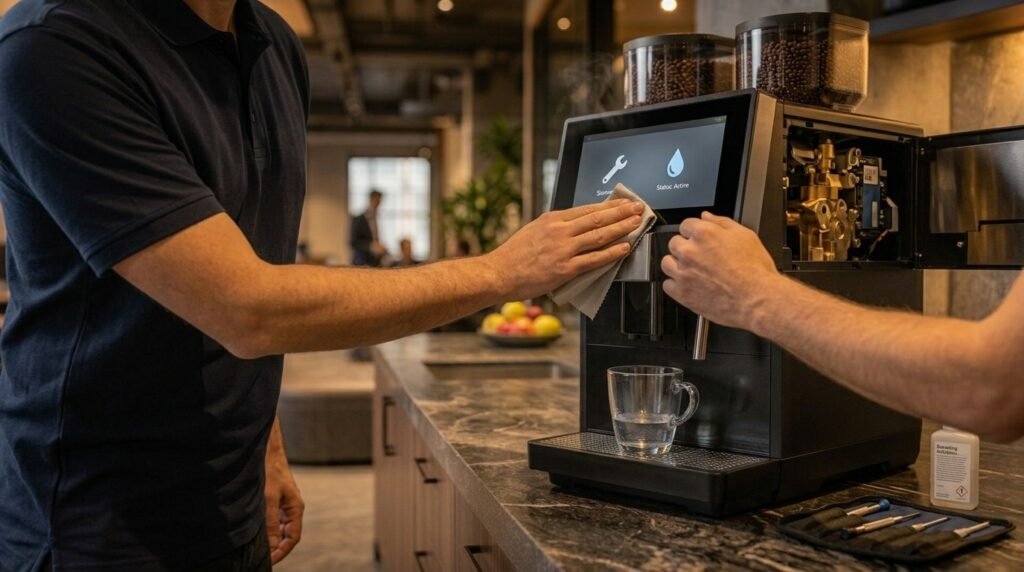
“What’s actually included?” is one of the first questions businesses ask when they see a coffee machine service plan advertised. The answer varies a lot between suppliers. The fine print matters more than the headline price. Here is what a genuine service plan should cover, what it usually does not, and what to check in the rental agreement before you sign.
Why Service Plans Exist
A commercial coffee machine has moving parts, seals, and a brew group that wear out with daily use. Without regular servicing, machines develop scale build-up, inconsistent extraction, and eventually breakdowns. A service plan bundles the ongoing maintenance a machine needs into one predictable cost instead of surprise repair bills.
What’s Typically Included
A genuine commercial service plan usually covers scheduled descaling and cleaning, replacement of wear parts like seals and gaskets, and callout visits for faults. Many plans also include a loan or swap machine if yours needs extended repair time. Some plans include the machine itself as part of the package. That is different from charging service on top of a separate purchase.
What’s Usually Not Included
Coffee beans, milk, and other consumables are commonly billed separately unless you have specifically opted into a bundled beans package. Damage from misuse can also fall outside standard cover. Running the machine without regular cleaning, or ignoring a fault for months, are common examples. It is worth asking what counts as fair wear and tear versus neglect.
Rental Agreements and Minimum Terms: What to Check
Most office coffee machine rentals have a minimum term, particularly when the supplier buys a machine for your site. Before you sign, check the length of the term, the notice period, what happens if your team grows or moves, and whether any cost applies to ending the agreement early. A lease is different again: it commits you to payments for the full term, regardless of whether you keep using the machine. See our guide to office coffee machine rental in Melbourne for how Panica Coffee rental works; terms and conditions apply.
Choosing the Right Machine Before You Sign
The best way to avoid a machine that does not suit your office is to size it properly first. Share your team size, daily cup count and kitchen layout, and ask the supplier to explain why the recommended model fits. Panica Coffee recommends a machine based on those details before any agreement is signed.
Signs You Need to Call for Service
A few signs mean a machine needs attention before a small issue becomes a bigger repair. Watch for inconsistent coffee quality, unusual noises during the brew cycle, or error messages on the display. Slower-than-usual pour times and visible leaking are also worth a callout. See our coffee machine repair and servicing page for how a callout works.
If the machine is already misbehaving, our guide to commercial coffee machine repairs in Melbourne lists the faults we see most and the checks worth making before you book a technician.
Frequently Asked Questions
How often should a commercial coffee machine be serviced?
Most commercial machines need a professional service and descale every three to six months. This depends on usage volume and water hardness, on top of daily cleaning by staff.
What happens if my machine breaks down mid-week?
A proper service plan includes a callout commitment. Many suppliers also provide a loan machine so your office is not without coffee while repairs happen.
Is servicing included if I buy a machine outright?
Rarely. If you buy outright, servicing is typically a separate, additional cost. This is one of the main reasons rental plans that bundle servicing work out cheaper over time for many offices.
Can I switch service plans without changing machines?
It depends on the supplier and machine. In many cases you can add or upgrade a service plan on your existing machine, but it is worth checking compatibility first.
Get a Free Quote for Your Office
Want to know exactly what’s covered before you commit? Tell us about your current setup. We will explain what a genuine service plan looks like for your machine and team size.
Your team still owns the daily jobs, and those are set out in our guide to the two minute daily clean on an office coffee machine.