
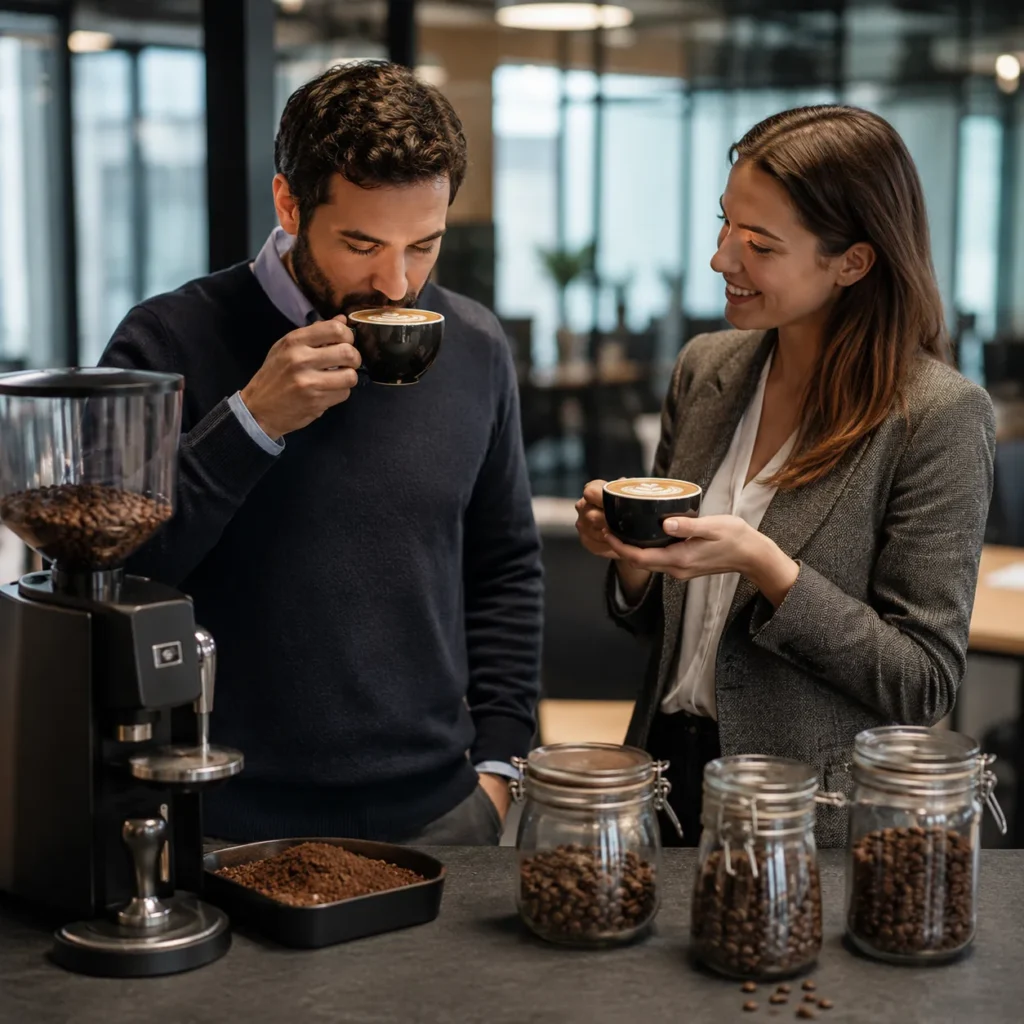
Specialty coffee is coffee that scores 80 points or more out of 100 on the Specialty Coffee Association scale, judged by trained assessors on aroma, flavour, acidity, body and the absence of defects. It is a grading term, not a marketing one, which is what separates it from words like gourmet or barista style. Panica Coffee supplies beans alongside commercial superautomatic coffee machines in Melbourne, and this guide explains what the grade actually means, whether it is worth it in a workplace, and what has to be right for it to taste like anything.
How is specialty coffee graded?
Green coffee is assessed by licensed graders who cup the coffee and score it against a defined protocol. A score of 80 or above is specialty. Below that, coffee is graded as commodity, which is the bulk of what is traded and most of what ends up in generic blends.
The grade also requires the green coffee to be largely free of defects, which is why traceability matters in this part of the market. Specialty lots are usually identified by farm, cooperative or region rather than simply by country.
What makes the difference in the cup?
Specialty coffee usually tastes more distinct rather than simply stronger. Depending on origin and roast, you get clearer notes of fruit, chocolate, caramel or florals, and less of the flat, ashy character that comes from defective beans or heavy dark roasting.
Strength is a separate question from quality. A darker roast is not a better bean, and a higher grade does not mean more caffeine.
Does specialty coffee suit an office?
Often yes, but not always the lightest or most unusual lots. In a workplace the coffee has to survive being made with milk, by different people, all day. A medium roast specialty blend with a rounded profile does that well, while a bright, delicate single origin can taste thin once it is under milk.
Consistency matters more than novelty in an office, because changing the blend frequently means the drink changes with it and people notice.
Will your setup do it justice?
Good beans will not rescue a bad setup, and there are three things that undo them. Stale coffee is the first, so order about four weeks at a time rather than three months, which our guide to how much coffee an office needs per month helps you calculate.
Water is the second, because it is most of what ends up in the cup and unfiltered water dulls the flavours you paid for. Our guide to water filtration covers it. The third is cleaning, since old coffee oils in the brew group taint every drink after them, and the daily routine takes about two minutes.
Common mistakes with specialty coffee at work
Buying pre ground is the most common. A superautomatic grinds to order, and ground coffee stales within days, so the grade stops mattering quickly. Buying very dark, oily beans is the second, because the surface oil builds up on the burrs and in the chute of an automatic grinder.
The third is buying too much at once to get a better price per kilogram, then using it over a quarter.
Need Advice From Panica Coffee?
Tell Panica Coffee how many people you serve and what your team drinks now. We can suggest a bean that suits a workplace machine, and be honest about when a cheaper blend would serve you just as well. Call 1300 529 505 or send the form below.
Frequently Asked Questions
Q1: What is specialty coffee? Coffee graded at 80 points or above out of 100 by the Specialty Coffee Association protocol, assessed on flavour, aroma, acidity, body and freedom from defects. It is a defined grade rather than a marketing description.
Q2: Is specialty coffee stronger? No. Strength comes from the dose and the drink, not the grade. Specialty coffee tends to taste more distinct rather than more powerful.
Q3: Is it worth it in an office? Usually, if you choose a blend suited to milk drinks and keep the beans fresh. A delicate single origin can be lost under a flat white.
Q4: Can a superautomatic machine make specialty coffee properly? Yes. It grinds to order and brews consistently, which covers most of what matters. The variables that remain are bean freshness, water quality and cleaning.
Choosing Beans for Your Workplace?
Tell Panica Coffee about your team, your machine and what people order. We can recommend a bean and a delivery schedule that keeps it fresh. Call 1300 529 505.