
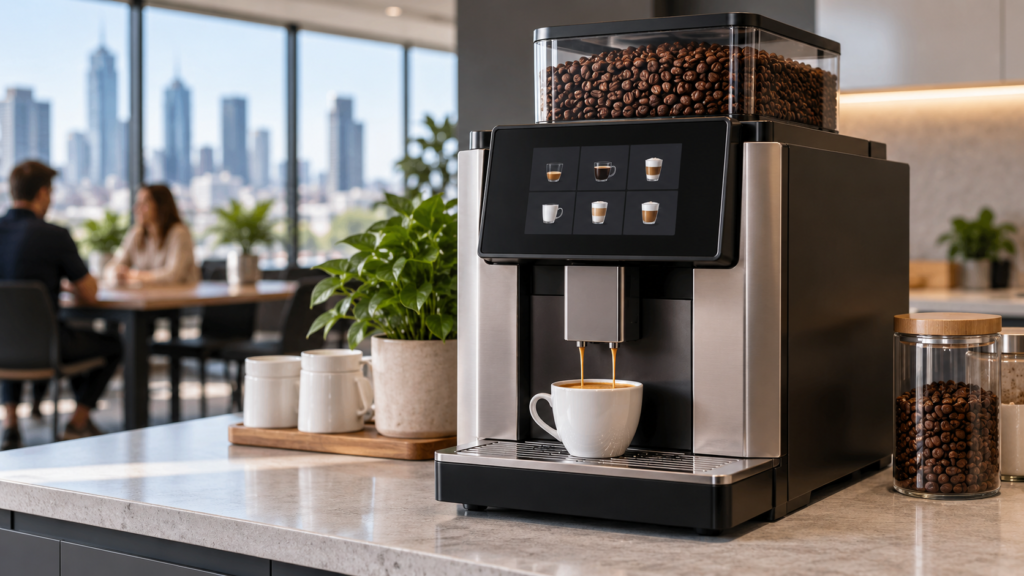
Most office coffee is a blend of two species, and the arabica vs robusta balance explains a lot. Panica Coffee rents and services commercial superautomatic coffee machines across Melbourne, and supplies the beans that go in them. So this question comes up whenever a workplace tastes something different from the cafe downstairs. Arabica is the sweeter, more aromatic species. Robusta is denser, more bitter and carries more caffeine, and it produces far more crema. Many espresso blends include some robusta deliberately, because crema and body are what make a milk drink taste full rather than thin. Therefore the useful question is not whether a blend contains robusta, but how much, and whether it is good robusta.
Arabica vs Robusta: What Is the Difference?
Arabica and robusta are two different coffee species, not two grades of the same bean. Arabica grows at altitude, ripens slowly and develops more acidity and aroma. Robusta grows lower, tolerates heat and disease, and yields more per tree.
In the cup the difference is consistent. Arabica tends towards sweetness, fruit and a cleaner finish. Robusta tends towards a heavier, more bitter, sometimes woody or nutty character, with noticeably more caffeine.
Because robusta is hardier and higher yielding, it is also cheaper. That is why the species became shorthand for cheap coffee, which is only half the story.
Why Would a Blend Include Robusta on Purpose?
For crema and body. Robusta produces a thicker, longer lasting crema than arabica does, and it gives an espresso more weight through milk.
That matters in an office more than it does in a tasting room. Most workplace drinks are flat whites and lattes, so the coffee has to stand up against a lot of milk. A delicate, high grown arabica that is lovely as a black filter can disappear entirely under 200ml of milk.
Italian style espresso blends have used robusta for exactly this reason for decades. In addition, the extra body helps a one button machine deliver a consistent looking drink without a barista adjusting anything.
Not sure what is actually in the beans you are buying? Panica Coffee can tell you what is in the blends we supply and how they behave in your machine.
Does Robusta Make Office Coffee Taste Worse?
Not by itself. Poor quality robusta tastes harsh and rubbery, and too much of it in a blend tastes flat and bitter. Well grown, well processed robusta in a sensible proportion adds body without those faults.
The problem in most workplaces is not the species. It is a very high robusta percentage chosen purely on price, often combined with a dark roast used to hide the quality underneath.
So if your team says the coffee tastes burnt or harsh, the blend ratio is worth asking about before anyone blames the machine. Our guide to the journey a coffee bean takes covers what happens before the bag arrives, including how roasting can rescue or ruin good green coffee.
Why Does the Office Coffee Taste Different From the Cafe?
Usually the blend, sometimes the milk, occasionally the machine. A specialty cafe often pours a high arabica blend, lighter roasted, dialled in by a barista each morning.
An office blend is built for a different job. It has to taste acceptable to fifty people with different preferences, survive sitting in a hopper, work through milk, and run unattended at one button press.
Consequently a workplace blend is usually rounder, darker and more forgiving, and often includes robusta. That is a design decision, not a shortcut. Our guide to what specialty coffee actually means explains where the two approaches diverge.
How Does Robusta Behave Inside a Superautomatic?
A commercial superautomatic coffee machine grinds the beans, brews the shot and textures the milk automatically. So whatever is in the hopper goes through the grinder untouched by a person. That makes bean choice a maintenance question as well as a taste one.
Very dark, oily beans, which are common in cheap high robusta blends, leave residue on the burrs and in the chute. Over time that residue slows the grind and affects consistency, so the cleaning routine matters more with an oily blend than a dry one.
Our daily coffee machine cleaning routine covers the two minute version, and it is the single best defence against an oily bean causing problems.
Arabica vs Robusta Side by Side
The table below sets out arabica vs robusta on the points that actually affect a workplace decision.
| Consideration | Arabica | Robusta |
|---|---|---|
| Flavour | Sweeter, more aromatic, more acidity | Heavier, more bitter, nutty or woody |
| Caffeine | Lower | Noticeably higher |
| Crema | Lighter, fades faster | Thicker, lasts longer |
| Through milk | Can be overwhelmed | Holds up well |
| Growing | Higher altitude, more delicate | Lower altitude, hardier, higher yield |
| Relative cost | Higher | Lower |
What Should a Melbourne Workplace Actually Ask For?
Ask three questions of any supplier. What is the arabica vs robusta ratio, how dark is the roast, and can we taste it through our own milk before committing.
The third one matters most. A blend tasted as a black espresso tells you very little about how it will land as the flat white your team actually drinks.
Our office coffee machine demo checklist is the right place to raise this. A demo is when you can taste the blend on the machine you are considering, with the milk you actually use.
Does the Blend Change How Much Coffee You Need?
No, consumption is driven by people rather than species. A heavier blend will not change how many cups your team drinks, although a better tasting one often does.
If you are working out supply volumes, our guide to how much coffee an office needs per month sets out the arithmetic. The same numbers apply whichever blend you choose.
Panica Coffee and Workplace Coffee Blends
Panica Coffee has rented, sold and serviced commercial coffee equipment for Melbourne businesses since 2017, and supplies beans alongside the machines. Because we service the machines as well, we see what a given blend does to a grinder over a year, not just how it tastes on the day. So the arabica vs robusta decision shows up in the service history too.
If you are still choosing equipment, our guide to office coffee machine rental in Melbourne explains what a rental plan includes, including bean supply.
Ask About Coffee Supply for Your Business
Tell Panica Coffee how many people are on site, what your team mostly drinks and what you are using now. We can recommend a blend that suits your machine and your milk. Call 1300 529 505 or send the form below.
Frequently Asked Questions
Is arabica always better than robusta?
No. Arabica is generally sweeter and more aromatic, but good robusta adds crema and body that help an espresso stand up through milk. Quality and proportion matter more than the species on its own.
How much robusta is in a typical office blend?
It varies widely between suppliers, which is exactly why it is worth asking. Ask for the arabica vs robusta ratio rather than assuming, because two blends at the same price can be built very differently.
Does robusta have more caffeine?
Yes, robusta carries noticeably more caffeine than arabica. That is one reason a blend containing robusta can taste stronger and feel more stimulating than a pure arabica blend at the same strength setting.
Why does our office coffee have more crema than the cafe?
Usually because the blend contains robusta, which produces a thicker and longer lasting crema. Crema volume is not a reliable guide to quality, so judge the blend on how the finished milk drink tastes.
Can a dark oily blend damage a superautomatic coffee machine?
Oily beans leave residue on the grinder burrs and in the chute, which affects grind consistency over time rather than causing sudden damage. A daily cleaning routine handles it, and Panica Coffee can advise if a blend is causing problems.
Should we choose a single origin instead of a blend?
For most workplaces a blend is the more practical choice, because it is built for consistency across many drinks. Single origins change with the season and suit a site that wants variety and has someone paying attention.
Can Panica Coffee supply beans with a rented machine?
Yes, Panica Coffee supplies beans alongside the commercial superautomatic coffee machines we rent and service across Melbourne. Tell us what your team drinks and we can recommend something suitable.
Still Weighing Arabica vs Robusta for Your Workplace?
Tell Panica Coffee what your team drinks and what machine you have. We can recommend a blend that works through milk, suits your grinder and keeps your people out of the takeaway queue.