
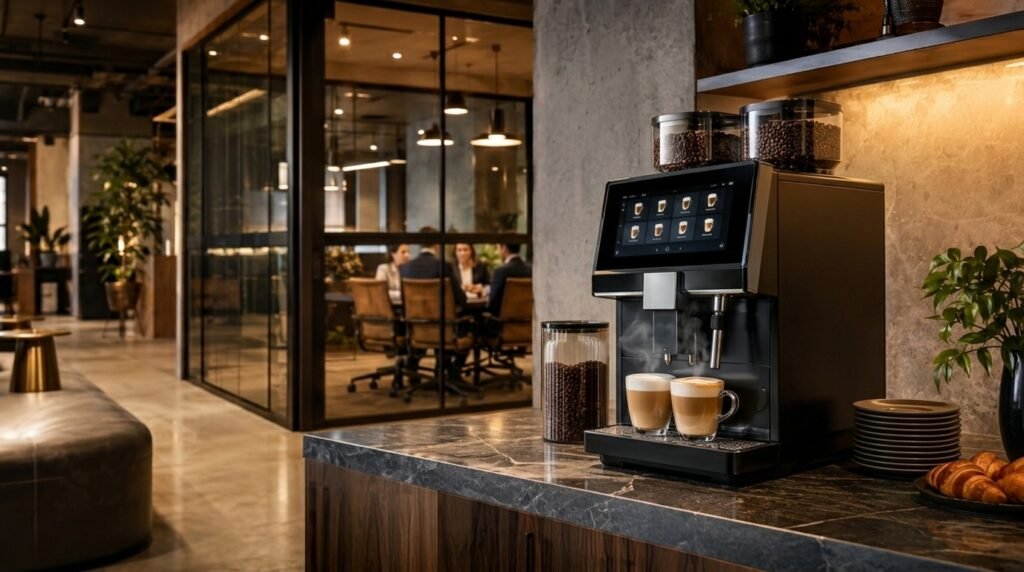
Choosing a coffee machine for the office used to mean picking between an instant kettle and a plunger. Today it means weighing up traditional espresso equipment, bean-to-cup super-automatics, and pod machines – three genuinely different technologies with different costs, maintenance needs, and staff experience. Get the choice wrong and you end up with an expensive machine nobody uses properly, a queue at peak hour, or a maintenance bill that eats the savings. Here is how the three types actually compare for a Melbourne office.
Traditional Espresso Machines
A traditional (semi-automatic) espresso machine is the same category of equipment you would find behind the counter at a cafe, scaled down for office use. Someone grinds the beans, tampers the grounds, pulls the shot, and steams the milk by hand.
Best for: offices with a genuine coffee culture, a barista-trained staff member or two, and a team small enough that a queue at the machine is not a daily productivity drain – typically under 25 people.
- Highest quality ceiling: a skilled operator gets genuine cafe-standard coffee
- Full control over grind, dose, and milk texture
- Requires training and a consistent operator, or quality varies wildly between staff
- Slowest per-cup throughput of the three options
- Most maintenance-intensive: daily backflushing, regular descaling, group head cleaning
Bean-to-Cup (Super-Automatic) Machines
A bean-to-cup machine grinds, doses, tamps, and extracts automatically at the touch of a button, often with an automatic milk system built in. It is the middle ground between a traditional machine and a pod machine, and it is what most mid-sized Melbourne offices end up choosing.
Best for: teams of 15 to 150 who want consistent, genuinely good coffee without needing a trained barista on staff.
- No training required – press a button, get a consistent result every time
- Much faster than a manual machine at peak periods
- Whole-bean freshness beats pod and capsule coffee on flavour
- Higher upfront cost than a pod machine, though rental removes that barrier
- Still needs regular cleaning and descaling, though less hands-on than a traditional setup
Pod and Capsule Machines
Pod machines use pre-portioned capsules and are the simplest option to operate: load a pod, press a button, done. They are common in very small offices and home setups.
Best for: teams under 10 to 15 people, or businesses that genuinely cannot commit to any ongoing servicing routine.
- Lowest upfront cost and simplest possible operation
- No grinder or hopper to maintain
- Highest cost per cup of the three options once volume climbs, since every cup uses a fresh, individually priced capsule
- Generates far more packaging waste per cup than bean-based machines
- Struggles at genuine peak-hour volume in a busy office
Choosing by Team Size and Volume
Team size is the single best predictor of which machine type suits an office, ahead of budget or taste preference:
- Under 10 people: a pod machine is usually the pragmatic choice – low volume means the higher per-cup cost rarely matters
- 10 to 25 people: bean-to-cup is typically the sweet spot, though a traditional machine can work if someone on the team genuinely wants to run it
- 25 to 150 people: bean-to-cup, often with a second unit or a higher-throughput commercial model once volume climbs past roughly 80 people
- 150+ people or multiple sites: commercial-grade bean-to-cup or multi-boiler traditional equipment, usually with a structured maintenance contract rather than ad hoc servicing
Our packages by team size show typical setups from 10 to 150 people.
The Real Cost-Per-Cup Picture
Pod machines look cheapest on the shelf but are rarely cheapest in practice once an office is making more than a handful of cups a day. Individually packaged capsules carry a cost premium that whole beans do not, and that gap compounds daily. Bean-to-cup machines cost more to acquire but bring cost per cup down significantly at any real office volume, which is why most businesses above about 15 people end up there once they run the numbers over a year rather than looking only at the sticker price.
Traditional machines sit in between on raw ingredient cost, but the labour cost of a dedicated operator is the number most offices forget to include – and it is often the largest cost in the equation.
To turn that into a bean order, see how much coffee an office needs per month.
Maintenance: What Each Option Actually Requires
This is where the decision most often goes wrong. A bean-to-cup or traditional machine that is not descaled and cleaned on schedule will fail early, produce worse coffee long before it breaks down entirely, and can void a warranty. Before committing to either option, confirm who is actually responsible for:
- Daily rinsing and milk system cleaning
- Weekly or fortnightly descaling, depending on Melbourne’s water hardness in your area
- Bean hopper cleaning to prevent oil buildup affecting flavour
- Scheduled professional servicing versus reactive repair calls
A rental arrangement that bundles maintenance removes this risk entirely, since the servicing schedule is handled without relying on someone in the office remembering to do it.
What a provider covers is set out in what is included in an office coffee machine service plan.
Frequently Asked Questions
Do I need a trained barista to run a traditional espresso machine?
Not necessarily, but someone on the team needs to learn the process and stay consistent. Without that, a traditional machine produces worse coffee than a bean-to-cup unit, not better. If nobody genuinely wants the role, this is a sign to choose bean-to-cup instead.
How often does a bean-to-cup machine need descaling?
Typically every two to four weeks in most Melbourne offices, depending on water hardness and how many cups the machine makes per day. Machines on a maintenance rental plan have this scheduled automatically rather than left to chance.
Can a bean-to-cup machine keep up with a busy 50-person office?
Yes, most commercial bean-to-cup units are built for exactly this volume. Offices approaching 80 or more staff usually add a second unit or step up to a higher-throughput commercial model rather than overworking a single machine.
Is a pod machine actually cheaper once you account for real usage?
Only at low volume. Individually priced capsules cost more per cup than whole beans, so the gap widens every day an office makes more than a handful of cups. Most businesses above about 15 people find bean-to-cup works out cheaper over a year.
Can different offices or sites use different machine types?
Yes. A business with multiple locations can reasonably run pod machines in a small satellite office and bean-to-cup in a larger head office. The right choice is driven by each site’s team size and volume, not a single company-wide standard.
Making the Decision
If you are choosing for a small team and low volume, a pod machine remains a reasonable, low-commitment starting point. For almost every office between 15 and 150 people, bean-to-cup delivers the best balance of coffee quality, speed, and low day-to-day effort. Traditional espresso equipment is worth the extra investment only where someone on the team genuinely wants to run it and the culture supports the queue that comes with it.
If you want to see how these machine types compare on rental pricing and inclusions for your specific team size, our coffee machine rental guide for Melbourne businesses breaks down current options, and our buying guide covers the same decision for businesses purchasing outright.
If the decision comes down to cost, our guide to lease, buy and rent compares them over three years.
Get a Free Quote for Your Office
Not sure which type fits your team? Fill in a few details below and a Panica Coffee specialist will follow up with a tailored recommendation and a no-obligation quote.