
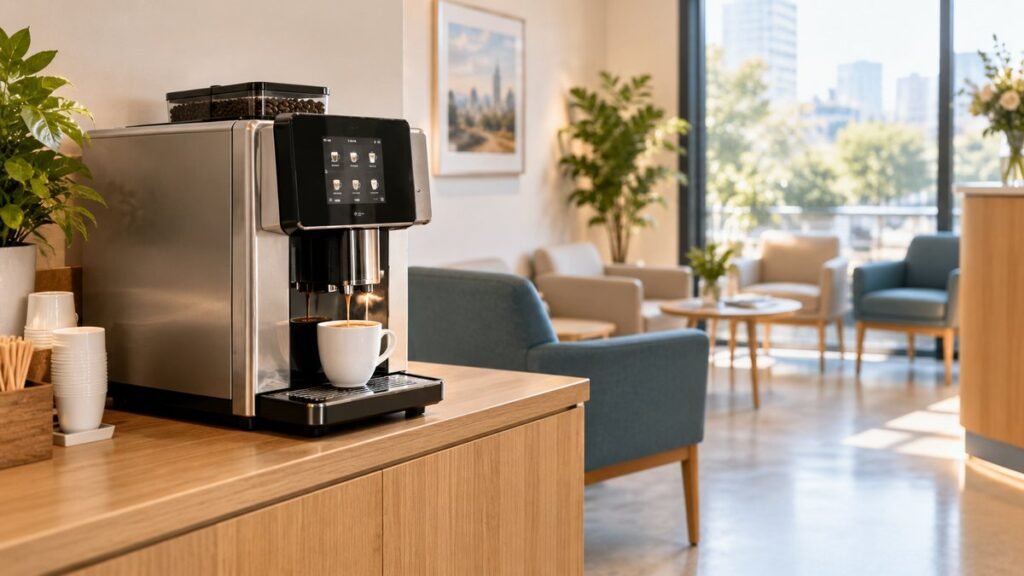
A waiting room coffee machine does a different job to the one in a staff kitchen. Your guests are not there by choice. They are early, running behind, or waiting on news they would rather not wait for, and a proper flat white is the cheapest way to make that wait feel shorter. Melbourne clinics, dealerships and showrooms all run on appointments, and all of them leave people sitting.
Panica Coffee rents, sells and services superautomatic office coffee machines for customer facing areas across Melbourne. This guide covers what a waiting room coffee machine needs, how to size one for guests rather than staff, and why rental usually suits a space your customers can see.
What to Look For in a Waiting Room Coffee Machine
- One touch operation. The machine has to work for someone who has never seen it before, on the first press. A superautomatic office coffee machine grinds, brews and textures milk at one button press, so no staff member has to leave the desk to help.
- Decaf and non coffee options. Medical, dental and allied health see plenty of patients who should not have caffeine. Hot chocolate covers children and late appointments.
- Quiet operation and sensible placement. Put the machine away from the reception desk rather than beside it. Guests hover while the cup fills, and that is the last place you want a queue forming.
- A finish that suits the room. In a dealership or showroom the machine is on display, so it becomes part of the fit out rather than back of house equipment.
- Cleaning that takes two minutes. A waiting room machine is judged on the drip tray as much as the coffee. Daily rinse, empty grounds, wipe down, then a scheduled service plan for the rest.
- Power and plumbing sorted first. Check the circuit before install and use a licensed plumber and electrician, in line with Energy Safe Victoria requirements.
Why Rental Suits a Customer Facing Area
- No upfront purchase, so the machine in front of customers can be a better one
- Servicing, repairs and parts are included rather than an unplanned bill
- Swap or upgrade as visitor numbers change
- Predictable weekly cost from $35 per week ex GST
- Installation and staff training handled by Panica Coffee
- Terms and conditions apply
Example Scenario: A Dealership With Two Areas
This is an illustrative example rather than a named customer. A dealership runs a showroom floor and a service department. The showroom gets the better looking machine with full milk drinks, because that is where the buying decision happens and where a customer holding a coffee tends to stay longer. The service department gets a workhorse that handles a steady run of waiting customers through the morning. Two areas, two different machines, one service schedule.
Sizing a Waiting Room Coffee Machine for Guests
Count guests, not staff, then remember your team will use it as well.
- Under 30 guests a day: a compact bean to cup unit is plenty
- 30 to 80 guests a day: a mid range machine with an automatic milk system
- 80 plus, or a multi bay service department: a high volume machine, ideally plumbed
If you are weighing up machine types first, compare bean to cup, pod and traditional espresso machines, and our packages by team size show the same sizing logic for staff areas. To plan the supply side, see how much coffee an office needs per month.
Ready to Sort Coffee in Your Waiting Room?
Panica Coffee assesses how many guests you see on a normal day, how long they wait, where the machine can sit, what power and plumbing you have, which drinks your visitors ask for and what you want to spend. We then recommend a machine that suits a customer facing space, install it, train your team on the two minute daily routine and service it on a schedule. Whether you need one unit in reception or separate machines for a showroom and a service department, we will put together a coffee machine rental option for your space. Call 1300 529 505 or request a free quote using the form below.
Get a Free Waiting Room Coffee Machine Quote
Tell us a little about your clinic, dealership or showroom and how many guests you see each day, and our Melbourne team will recommend a suitable machine and rental option.
Where the waiting area sits inside a residential setting, the thinking changes. See our guide to coffee machines for aged care staff rooms and visitor areas for that version of the problem.
For a site where people serve themselves rather than waiting to be served, see our guide to coffee machines for gyms in Melbourne.
Frequently Asked Questions
Q1: What is the best coffee machine for a clinic or dealership waiting room? A superautomatic office bean to cup machine with one touch drinks, decaf and hot chocolate suits almost every waiting room, because guests operate it themselves.
Q2: How many cups a day should a waiting room machine handle? Size it on guests seen per day: under 30 suits a compact unit, 30 to 80 suits a mid range machine with automatic milk, and 80 plus calls for a high volume plumbed machine.
Q3: Where should the machine go in a waiting room? Away from the reception desk, with space for two people to stand, so guests are not queuing across the counter while a cup fills.
Q4: Who cleans a waiting room coffee machine? Your team does a two minute daily routine, rinse, grounds and drip tray, while Panica Coffee handles servicing, descaling and repairs on a schedule.
Q5: Is renting better than buying for a customer facing area? Usually, because rental keeps a better looking machine in front of customers with servicing included, from $35 per week ex GST; terms and conditions apply.
A school staff room has the same short window problem as a busy waiting room. Our guide to coffee machines for schools in Melbourne sets out how to size a machine for recess and lunch.
Ready to Choose a Waiting Room Machine?
Tell Panica Coffee how many guests you see on a normal day and where the machine will sit, and we will recommend a superautomatic office coffee machine that suits the space. Call 1300 529 505.